The closing price today will not necessarily be the opening price tomorrow in a stock. This is due to the fact that demand or supply may shift an order bias, causing the stock to gap higher or lower the following session. If there are many more buyers than sellers, a stock will gap up. If there are many more sellers than buyers, a stock will gap down.
A stock gaps in price when a blank space is left on the chart where no trading occurred. A gap up is when the current bar’s low is above the previous day’s high. A gap down is when the current bar’s high is below the previous day’s low. Stock gaps occur as a result of excessive buy or sell orders which forces prices either up or down.
There are four kinds of trading gaps in stocks, and identifying each type of gap is helpful when trading gaps in stocks.
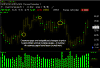
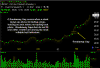
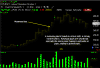
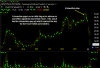
Click on the stock gap terms above to learn more about each.