Falling wedge patterns can be found in both uptrends and downtrends, but taking notice of the prevailing trend will help you determine whether the falling wedge signals a continuation pattern or a reversal pattern. In both cases, falling wedge patterns are generally resolved to the upside.
Context: Found within a downtrend, the falling wedge is often a reversal pattern. When found within the context of an uptrend, the falling wedge is similar to a bull pennant and is a continuation pattern. The example shown on this page is a falling wedge reversal pattern found at the end of a downtrend.
Appearance: The falling wedge pattern is a contracting trading range with a downward tilt. This may be seen by drawing two trend lines, a steeper trend line connecting minor highs, and a shallow trend line connecting minor lows. The early portion of the wedge has a wider price range, while the latter stages of a falling wedge are characterized by tighter price action. Volume expansion which accompanies a breakout from a falling wedge adds to the reliability of this chart pattern.
Breakout Expectation: In the case of a continuation falling wedge, the widest portion of the wedge may be measured and added to the breakout level to determine the upside move which follows. When a falling wedge is a reversal pattern, the widest portion of the wedge may be added to the breakout level to determine the upside move which follows.
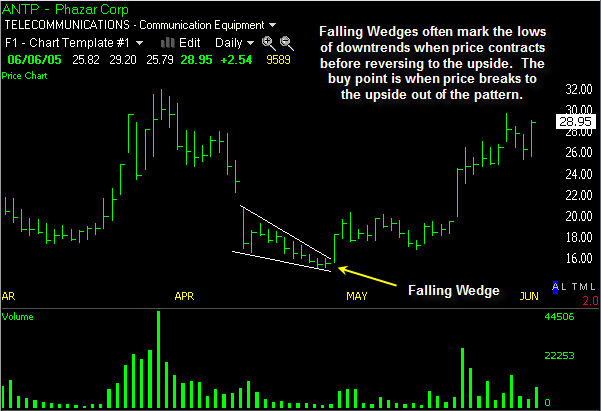
This stock formed a falling wedge pattern during its downtrend which led to an upside reversal and a very reliable trading low. Once the upper trend line was broken to the upside, the stock moved higher with ease.
Falling wedge patterns are reliable signals we like to trade from, so we point them out to members of our stock pick service whenever they’re found on the charts. Come trade with us!
Learn more about wedge patterns like the rising wedge pattern.