Stocks are often limited in their movement when they encounter support and resistance levels. Support and resistance form at areas of excessive demand (buyers providing a support level) or supply (sellers providing a resistance level). Once support or resistance levels are penetrated or broken, price is once again free to move into new relative high or new relative low territory.

Support – Stock Support
Support in a stock forms at an area where prices are limited in their ability to move lower due to the presence of buyers at lower prices. Support levels sometimes occur by themselves, while other times they are depicted with horizontal trend lines in chart patterns such as a triple bottom pattern. When support is broken to the downside, a stock is free to move lower due to the absence of buyers and demand.
Example of stock support:
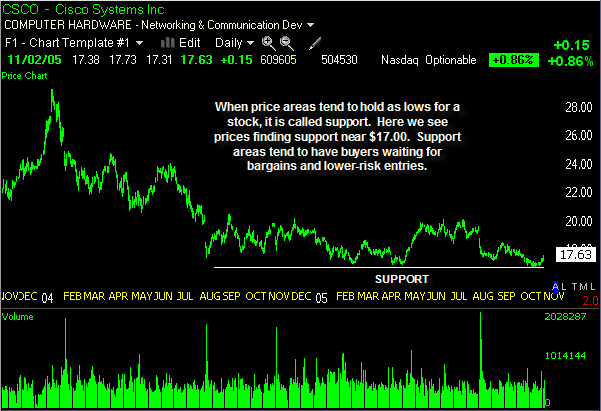
This stock found support which held prices up without allowing them to drop further. Buying stocks on support is a trading method which provides a natural stop loss in the event that support breaks. Stocks will often rally from levels of support.
Resistance – Stock Resistance
Resistance in a stock forms at an area where prices are limited in their ability to move higher due to the presence of sellers at higher prices. Resistance levels sometimes occur by themselves, while other times they are depicted with horizontal trend lines in chart patterns such as a triple top pattern. When resistance is broken to the upside, a stock is free to move higher due to the absence of sellers and supply.
Example of stock resistance:
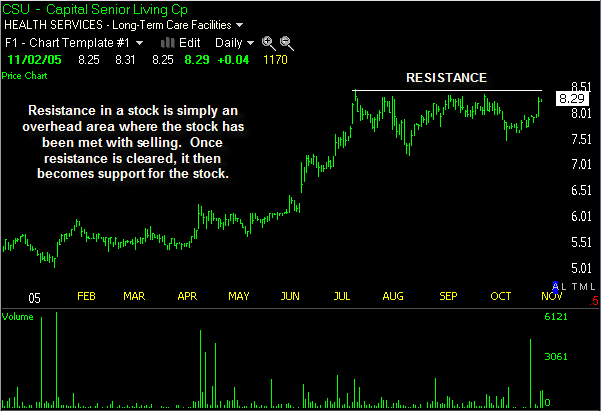
This stock was unable to clear resistance in the area where sellers lurked. Resistance at the horizontal trend line kept the stock from moving higher. Resistance levels are profit-taking zones and sell signals.
Horizontal Trend Lines – Support and Resistance
Horizontal trend lines are drawn along relative highs or relative lows. These kinds of trend lines identify and confirm support and resistance levels. Horizontal trend lines may by themselves identify trading opportunities, or they may be part of a chart pattern such as a cup and handle or the neckline in a head and shoulders top. Horizontal trend lines require the presence of at least two highs or lows in the same area in order to be valid. As with other trend lines, horizontal trend lines gain validity the more times price touches them. Each of the charts above have horizontal trend lines, serving as support and resistance levels.
Support and resistance levels are critical elements to our trading approach, so we’re always pointing out these levels to members of our stock pick service. Come trade with us!
Return to the main chart patterns page to learn more trading terms.